At PHYTEC, our goal by making System on Modules is to accelerate product development. This year, we decided to put that claim to the test and make a product for Embedded World.
Could a small team of engineers design and build a complete handheld gaming device in just four weeks?
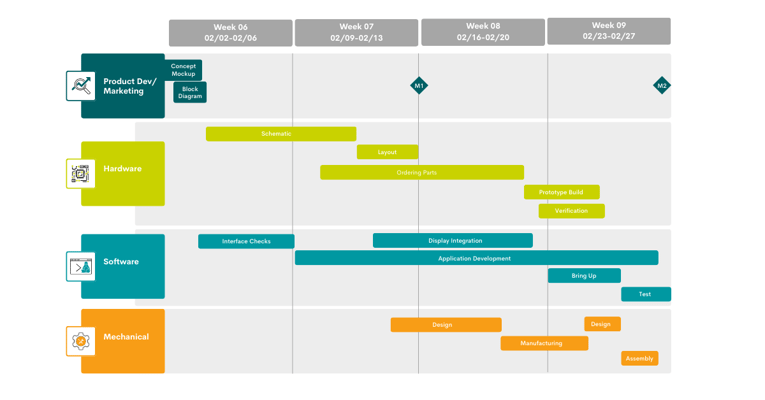
In February 2026, we set out to find out. The project kicked off on February 2nd, and just over a month later the finished device was brought to Embedded World 2026 on March 10th, where attendees could try it live on the show floor. The result was a fully functioning handheld gaming device powered by our new phyFLEX-AM62Px SOM.
The project also highlighted an approach we call Dev Kit to Done. By starting with a proven development platform, reusing verified circuits, and building on PHYTEC’s Linux BSP, engineers can move from prototype to product much faster. Instead of reinventing the foundation, teams can focus on building their application.
Real engineers. Real solutions.
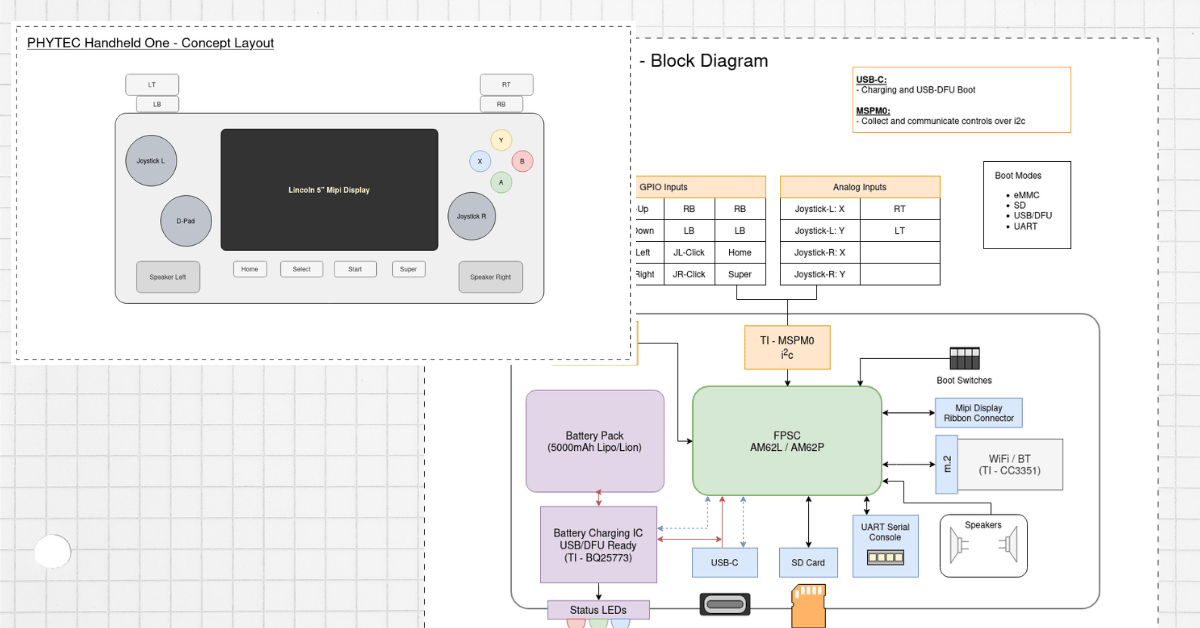
 Concept
Every project starts with defining the idea. For us, this part came easily. We chose a handheld gaming console, something our engineers would enjoy using. For those familiar with the Seattle area, this device is perfect for passing the time on rainy ferry commutes from Seattle to Bainbridge Island.
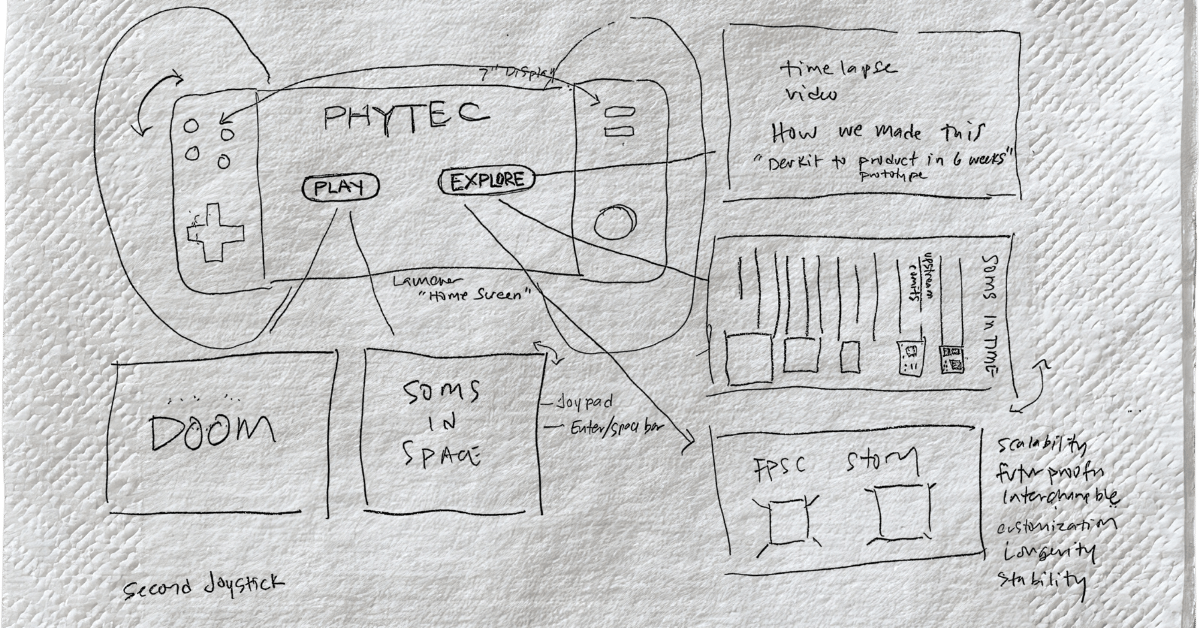
Working with our new AM62P based SOM, we are impressed with the GPU performance of Texas Instrument’s SoC. In the same thought, we wondered how far we could go with a system that might not use a GPU at all, which led us to experiment with the AM62L as well. This thinking shaped a system that can scale and swap between the AM62L and AM62P, showcasing PHYTEC’s common Future Proof Solder Core (FPSC) footprint for handheld portables and HMI devices.
Early mockups helped define the layout of the device, including screen size, button placement, joystick controls, and overall form factor. Concept work may seem simple, but it is where creativity meets real-world constraints. Many of our customers face the same challenge: they know what is possible but are unsure how to make it a reality.
Block Diagram
Once the concept was clear, the team translated it into a system architecture. The block diagram defined the interfaces, signals, power paths, and the number of controls needed.
Starting with the phyFLEX FPSC SOM footprint simplified this process significantly. Processor, memory, and power management were already handled by the phyFLEX-AM62P and phyFLEX-AM62L modules, allowing the team to focus on connecting peripherals such as the display, inputs, and connectors.
Schematics & Hardware Design
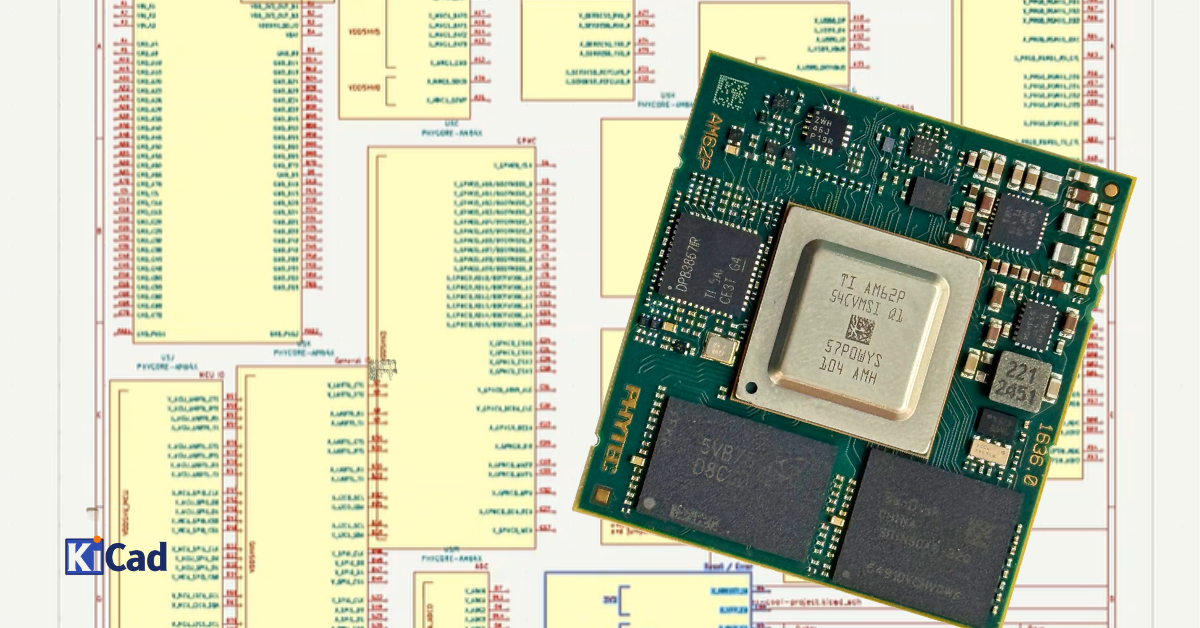
Schematics were developed using KiCad, an open-source CAD tool.
Schematic design is often one of the most complex parts of an embedded project. Fortunately, the SOM handled most of the processor-level complexity, allowing the team to focus on the surrounding circuits. Development was further accelerated by reusing previously verified circuits from the development kit, a strategy we recommend for reducing risk and shortening time to market.
Software Prototyping
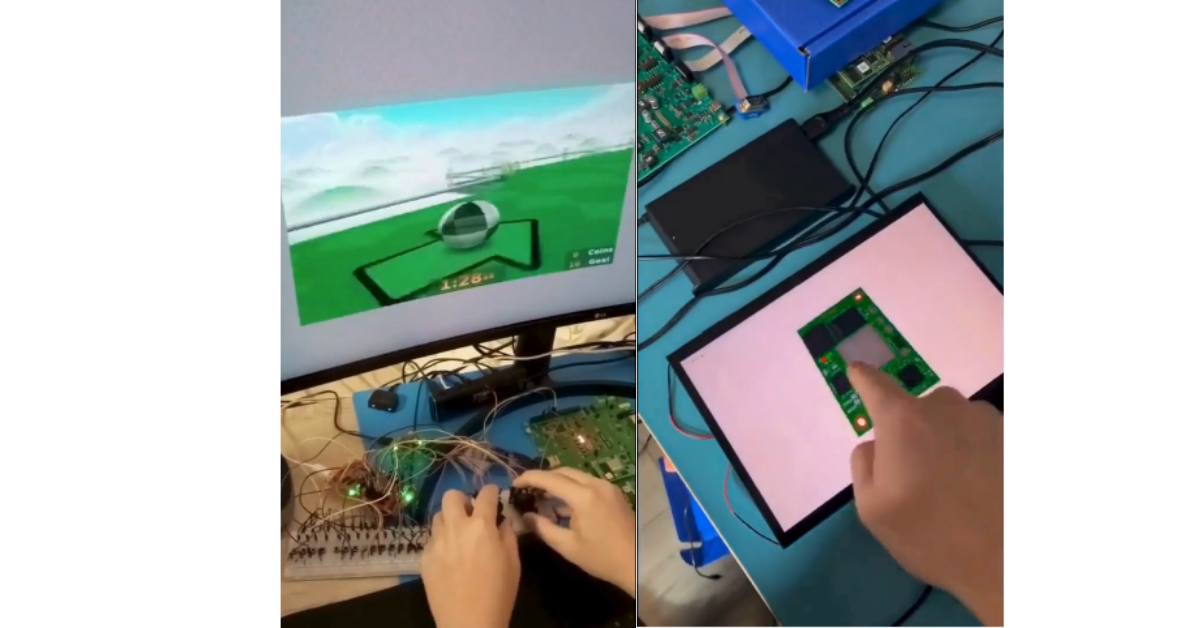
Hardware and software development progressed together, as embedded systems must be designed with software in mind. Our Software and Applications Engineers divided the work to validate key components early.
-
One engineer implemented joystick and button controls and wrote custom RTOS drivers on the MSPM0 evaluation kit platform. The MSPM0 communicated with the AM62P SoC over I2C, providing a reliable interface for input validation.
-
Another engineer brought up the Lincoln Technology Solutions 5-inch MIPI-DSI display on the phyCORE-AM62Px development kit. This work was provided as a device tree overlay, making it straightforward to apply to the handheld device.
-
The third engineer developed a Weston-based 3D visualization, allowing users to manipulate a digital model of the SOM on screen. The source code was encapsulated in a meta-layer compatible across all PHYTEC products using our Yocto-based build system.
Early prototyping ensured that critical hardware components were validated before finalizing the design.
PCB Layout & Production
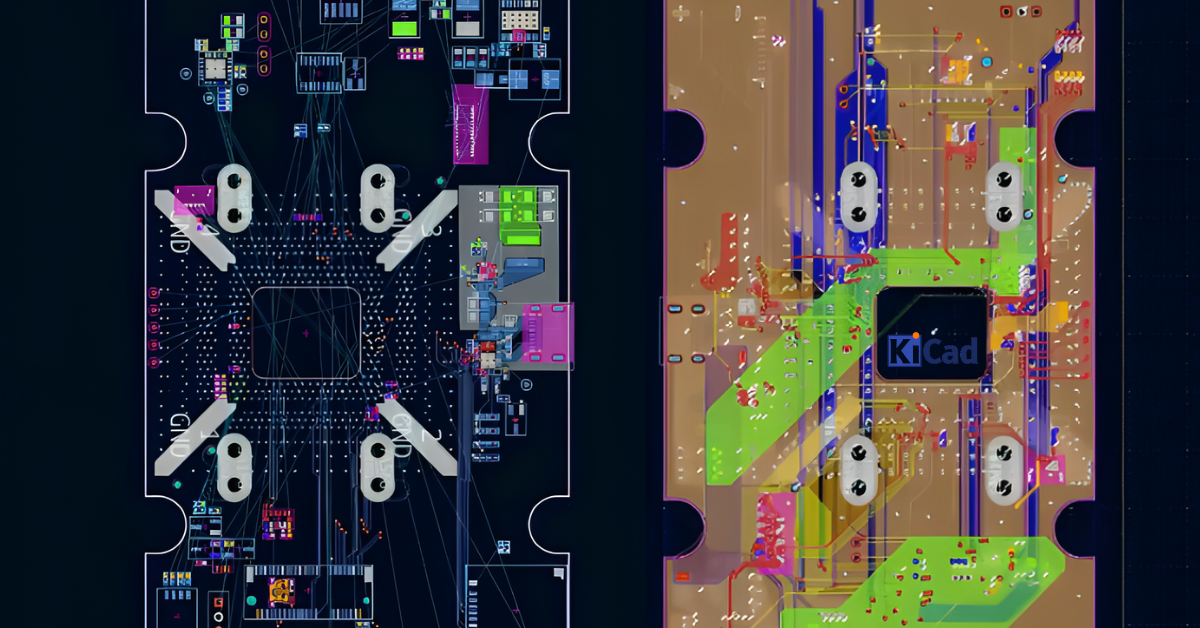
With schematics complete and circuits verified, the team moved into PCB layout using KiCad, with hardware and mechanical engineers collaborating on component placement and manufacturability.
Once finalized, PCBs and components were ordered and assembled in-house. While PHYTEC’s primary manufacturing happens in Germany, our U.S. office frequently handles prototype reworks and component verification reworks.
This stage included the practical challenges of real-world engineering, such as component sourcing, part kitting, and preparing the system for assembly.
Mechanical Design & Assembly
To complete the handheld, the team designed a custom enclosure using 3D printing and CNC machining.
The rear housing was intentionally left transparent to showcase the hardware inside. This design choice also paid tribute to Texas Instruments’ classic transparent calculator designs.

Software Integration & Testing
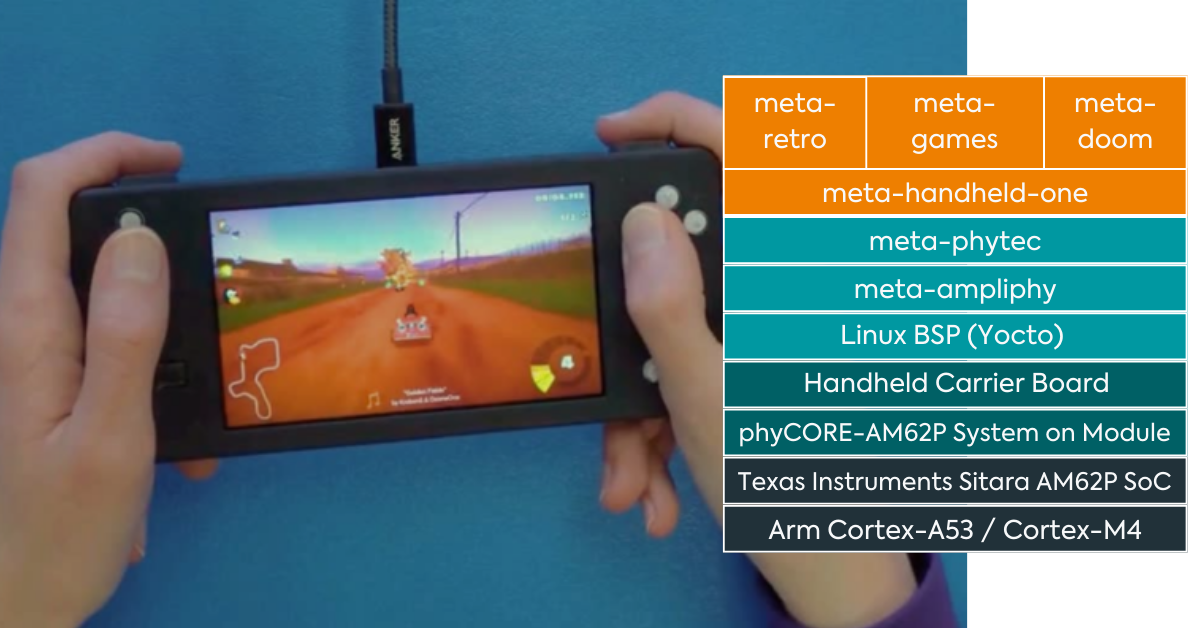
Final push, the software team integrated the prototypes into a full application environment. They created a custom launcher interface that included the 2D and 3D viewer, a GPU performance score using glmark2, and a video player.
Of course, no handheld would be complete without games. The team added several titles, with three visible in the default launcher: SuperTuxKart, Freedoom (of course it runs doom!), and Neverball.
At Embedded World 2026, attendees were given the handheld to try for themselves. Having hundreds of engineers test the device live provided the ultimate measure of its design and functionality, allowing the team to see firsthand how the system performed under real-world conditions.
What This Project Demonstrates
This handheld project was more than a fun demo. It shows what is possible when experienced engineers collaborate across disciplines and start from a proven platform.
By leveraging the phyFLEX-AM62Px, the team avoided the most time consuming parts of processor integration and focused on building a working product. Using our development ecosystem, including reference circuits and the PHYTEC Linux BSP, the project followed an approach we call Dev Kit to Done. Engineers can start with a development kit, reuse proven designs, and move quickly from prototype to a finished product.
The project also demonstrates the power of teamwork, creative problem solving, parallel development, and a willingness to learn quickly when challenges arise. This project shows that when you have an idea, you can bring it to life with Real Solutions. With the right platform and starting point, great ideas can move quickly from Dev Kit to Done, turning concepts into working products faster than ever.
But who are we kidding, it was actually really fun.


.png?width=600&height=315&name=Hubspot%20blog%20image%20banner%20(1).png)